Behind the scenes in Vietnam
I've had a lot of interest about my recent six months trip to Vietnam. Although I have written on my blog about Vietnam, many people wanted to know about everyday things not normally mentioned in a general blog. The most common question was, "what did you do with your time"? Well, when you take away, eating and sleeping, meeting up with your friends and having Vietnamese ice-tea or coffee; there were the massages and steam-baths — usually one or two a week at $5. Of course I'd have to have a $1.50 manicure. You don't think that I'd cut my own nails do you? With the extreme heat, an hour or two afternoon nap was de rigueur. Shopping malls were always packed as if they would permanently close their doors the moment you entered. Taking Vietnamese classes everyday for several hours. Teaching English as an unpaid volunteer, several times each week, to adult Vietnamese. Taking martial art classes. Let me see, are there any hours left in the day? Checking my emails and writing my blog. Talking on my mobile to friends. Watching TV. Hanging out in bars and chatting to expats and tourists.
And then there were the books — about thirty in all. I started to notice adults reading Harry Potter. While I had the utmost respect for J.K Rowling as an author, I really had no desire to read a Harry Potter book. Then one day I was in this bookstore where they sell and exchange books 2 for 1 or $2 each. I picked up the first Harry Potter book, looked at the cover, and put it back on the shelf. Not finding a book I wanted, I again picked up the Harry Potter book. By sheer coincidence, it happened to be the first Harry Potter book, " Harry Potter And The Philosopher's Stone". It was a slim book, only $2, and could be returned if I didn't like it. As I read through it, I thought I'd made a huge mistake. Here was J.K.Rowling describing people flying around on broomsticks and casting spells with magic wands. I soon realized that it was part of the characters dream, and would return to reality in due course. This turned out to be not the case. I was drawn into that wondrous place known as the suspension of disbelief. There was no turning back — I was hooked and read all seven books. Here they are with the other 22 books:
Harry Potter And The Philosopher's Stone by J.K Rowling
Harry Potter And The Chamber of Secrets by J.K.R
Harry Potter And The Prisoner Of Azkaban by J.K.R
Harry Potter And The Goblet Of Fire by J.K.R
Harry Potter And The Order Of The Phoenix by J.K.R
Harry Potter And The Half Blood Prince by J.K.R
Harry Potter And The Deathly Hallows by J.K.R
Angels and Demons by Dan Brown
The Da Vinci Code by DB
Digital Fortress by DB
Deception Point by DB
The Constant Gardner by John Le Carre
Cover Her Face by P.D. James
To Cut A long Story Short by Jeffrey Archer
Catch-22 by Joseph Heller
Op-centre by Tom Clancy & Steve Pieczenik
The Bear And The Dragon by Tom Clancy
Without Remorse by Tom Clancy
The broker by John Grisham
The King of Torts by John Grisham
The Testament by JG
The Brethren by JG
The Summons by JG
The Opposite Of Fate by Amy Tan
State Of Fear by Michael Crichton
Master Of The Game by Sidney Sheldon
If Tomorrow Comes by SS
Tell Me Your Dreams by SS
The Doomsday Conspiracy by SS
The Satanic Verses by Salmon Rushdie
Social Customs:
Vietnam, like many of its Asian neighbors, has a tight-knit family social structure. While it is true that some family members emigrate to foreign countries to expand their capabilities and further their opportunities, most stay within their immediate family circle until they marry.
Why is this? The obvious reason is economics. Most young men or women would leave the family fold if they could afford an apartment, utility costs, and food. The realty is that tradition and economics bind them to their parents nest. Of course they must pay a nominal amount to the family to stay. This in turn helps the parents or family. It's not unusual for young men and women to remain with their parents until their late twenties or early thirties. In western society this would be considered inconsiderate and a burden upon the families; not so in Vietnam.
In western countries, eyebrows would hardly be raised if couples chose to live together. In Vietnam, not only does this fly in the face of social tradition, it's also against the law. It does, however, occur with Vietnamese girls and western men.
In recent years there has been a limited tendency to accept this type of relationship. As a result, these girls are sometimes viewed as being less than whole by their families and their neighbors. Less traditional families recognize that social norms are ever changing and go with the flow. While hand-holding in public is now commonplace, kissing in public has not yet reached that point. Go to any park in Hanoi or Saigon and you will see many couples sitting on motorbikes glued to each other. They're there because they don't have any other place to go. In Vietnam, couples that ride their motorbikes this way are known as "hug-bikers".
Business:
Vietnam has a thriving entrepreneurial spirit as a consequence of its inexhaustible supply of cheap labor. From the sprawling industrial complexes on the outskirts of Hanoi, to the mammoth warehouses close to Saigon (HCM), products are manufactured or processed before being consumed through domestic channels or export markets. Huge armies of mostly female workers are bussed to their respective factories. In some cases, where twenty-four-hour production is necessary, thousands of workers are housed on site and sleep in multi-tiered bunk beds. They do this because they can save money without having to spend too much. Even though they make low wages compared to western standards, they are often able to send money to their distant family members as a result of the extended hours they work. In the typical Vietnamese manufacturing business, almost every waste component is either utilized, re-cycled, or sold.
Money:
Currently, the Vietnamese Dong is trading at 17,000D to $1US. As always, cash is king with the US dollar being widely accepted. Travellers checks, frequently used in the past, have been overtaken with the ubiquitous ATM on every major street. When I first arrived in Hanoi, I had no idea that the ATM dispensed millions in local currency. I was reluctant to press the OK button in case I needed a larger bag to carry my money. I quickly learned that 100,000D and 500,000D notes were used in everyday transactions.
Everywhere you go someone is either engaged in selling or servicing something. From the woman on the street trying to hard sell you cigarette lighters (even though you don't smoke), to the wealthy Vietnamese driving his late model Mercedes to his restaurant business. Vietnamese are not shy about business and commerce. The usual approach is "in your face" which can be a little off-putting to the unwary. In the major cities, such as Saigon (HCM), it's almost impossible to find a street without some kind of construction going on. In the city center, thirty story buildings under construction, are commonplace. The larger projects are worked 12 hours a day and 7 days a week, some even 24 hours a day. The quicker the building is constructed, the quicker the return on investment (ROI). Many of these buildings have dual purposes — retail on the first few floors, and residential space on the remaining floors. These buildings have been constructed with one purpose in mind — the shopper with a high disposable income and corporate tenants.
Vietnamese are inveterate bargain hunters. Not only do they expect to get a bargain, they also expect to be bargained with. Don't engage in lengthy bargaining unless you intend to buy. I once accompanied someone to the well known "Benh Thanh" market to buy clothing. Watch the video: http://uk.youtube.com/watch?v=rWY5fXOFn80After about ten minutes of bargaining, no price was agreed upon, and he then went to two other merchants and did exactly the same thing. I then realized that some of the merchants had been tipped off and were whispering among themselves. I asked him why he didn't buy anything and he said, "I just wanted to see how low they would go,I never really intended to buy anything". The next time he wanted to go shopping, I told him I was busy, and he went back on his own. It was weeks before I dared to set foot in that market again.
Restaurants:
Eating out In Vietnam often means just that, eating outside on the street. You need only walk fifty meters, on any given sidewalk, to find street food vendors operating right outside an expensive restaurant. Sidewalks are not meant for people to walk on. No, No, No. They are meant to park hundreds of motorbikes and set up a sidewalk business. Walking on a sidewalk thinking you are safe from traffic is unwise. Think of the sidewalk as a street, and you'll probably survive (maybe).
So, now you're inside the restaurant and you see other westerners there — it can't be too bad, right? What to order? All restaurants have menus in English. If you just arrived in Vietnam, then the steak and fries seems to work at $3 including your beer. But more culinary delights beckon the unsuspecting diner. How about crab soup with sheep's brains? (I know, sheep are stupid they don't have brains). Of course they don't tell you that the crab soup has sheep's brains, why would they need to? After all, their Vietnamese patrons just scoop it up without question and savor every spoonful. Your choice of restaurants is limited only by your imagination.
Sooner or later you will try Dorian fruit. Believe me when I tell you that you will never eat this fruit again. Not only does it smell awful, the taste matches the smell equally. It should be said that many Vietnamese also disliked this fruit. (http://www.bbg.org/gar2/topics/kitchen/2002fa_durian.html
If you stick to the main tourist areas, you won't be asked to select an eel, either, and wait while it's killed, gutted, and cooked with a delicious eel caramel sauce. http://www.vietnamese-recipes.com/vietnamese-recipes/seafood/eel-braised-in-caramel-sauce.php)Seriously, though, the food in Vietnam is great. If you still want to eat from a small street vendor, (I thought all Vietnamese street vendors were small) it's worthwhile checking out the water where the pans and dishes are washed. Bon Appetit.
Bars:
Expats, whether they be British, Australian or American , love to congregate in local watering holes while exchanging stories. The more the stories are told, the more outrageous they get. Seductively cladded bar girls drape themselves over the eager expats or tourists. An enticing look usually guarantees a drink is bought for the bar girl. Sometimes these men are so lonely that they believe they've fallen in love with the bar girl. When this happens, the men lose all sense of reality and spend money like crazy in the hope of gaining their affection. The bar girls slip away at closing time, and the glazed-eyed expat is left nursing an empty beer and looking at an empty wallet. Never happened to me, though.
Hotels:
Want to live like a king? You can with a range of five star hotels waiting to cater to your every whim. I'm not going to name them, just get your PA to check into it for you. For the rest of us, * to *** are the best deals in town. That town of course, being Saigon. I stayed in small family run hotels for an average of $8 per night. Included: cable TV, refrigerator, queen size bed. Few of these small hotels have restaurants. All the hotels were spotlessly clean with bed linen changed daily. None of them had elevators. So, if you're going to be on the fifth floor, and you come and go three or four times a day, you'd better be fit. Usually around midnight, heavy metal roll up shutters or gates are slammed shut; the sidewalks are rolled up, and everyone is locked inside. If you come back late, someone sleeping next to the gate will let you in. This ensures that no unauthorized persons will slip into the hotel at night. Although there is no curfew, most people don't want to be on the deserted streets after midnight, especially alone, or without transportation.
Hotels in Hanoi tend to be more expensive than Saigon. My guess is that there are just less of them, which makes for less competition and higher prices. Some of the best hotel deals can be found at coastal resorts such as Nha Trang, and Vung Tau. $5 per night is fairly standard. If you're on a budget, it's hard to beat Vietnam for price and quality.
Language:
Westerners who come to Vietnam can immediately recognize the Vietnamese alphabet — It basically follows our Roman alphabet — how convenient. But that's where the similarity ends. If you've ever tried to read Swedish, then you'll understand what I mean. I managed to read, write, and speak Vietnamese in six months of studying everyday. Many words in English have an equivalent of two or more words in Vietnamese. Sometimes I would say something in fluent Vietnamese, only to be asked to repeat it several more times. If all else fails, English is still the Lingua Franca. http://www.vietnameseclasses.net/
Population:
Estimates for the population of Vietnam for 2008 were 86 million. HCM (formally Saigon 6.6 million, while Hanoi shows 6.2 million. Hanoi, "the capital city's administrative borders were officially expanded to include Ha Tay Province and parts of Hoa Binh and Ving Phuc", according to source: http://www.state.gov/r/pa/ei/bgn/4130.htm
If there are 6.6m people in Saigon, then there are 6.6m + motorbikes being driven by 6.6m drivers talking on their mobile phones. Of course I exaggerate, but few people will argue the point when they're caught up in a massive traffic jam. If the streets appear to be devoid of older people, it's not because they're staying at home — there are just less of them. 65% to 70% of Vietnamese people are under the age of 30, while 20% are under the age of 15, with the remainder of 10% to 15% over 60.
Source: (http://www.vietnamtourpackages.com/Vietnam-Travel-Guide/the-culture-vietnam/population-vietnam.htm
"The legal age, for marriage in Vietnam, is 18 years for women and 20 years for men". "The legal age for employment is 15 years". http://www.policyproject.com/pubs/countryreports/ARH_Vietnam.pdf
Saigon and Hanoi have some of the highest population densities in Asia, as well as having some of the youngest in age.
Climate:
Saigon and Hanoi haven't quite reached the levels of pollution seen in Beijing, China, but if these Cities don't do more to restrict emissions, then standards of air quality will fall even lower. It's not advisable to ride a motorbike, in Saigon or Hanoi, without wearing a protective mask. This applies to the passenger also. It's a rare day when you can see the sun in Saigon. Pedestrians can often be seen wearing masks to protect themselves. A visit to one of the cleaner, coastal towns, such as Nha Trang, Muine or Vung Tau, will bring a welcome relief to the Carbon Monoxide and other reactive gases being absorbed by Saigon residents and visitors alike. Dalat, in the central highlands, has a milder climate since it's located at an altitude of 1475m. Residents, and visitors, can enjoy relatively clear skies during the day, and nights with a slight chill.
Health:
I had several occasions to visit local medical clinics in Saigon. One for an old torn rotator cuff injury, (that's when you try to put your arm through the sleeve of a shirt with the cuff links still attached), which had me almost frozen in motion and writhing in pain. I received treatment quickly, inexpensively ($12 per visit), and professionally. After two weeks of receiving acupuncture, heat treatment, massage and manipulation, my shoulder was back to normal and the pain was gone. Another time I had respiratory symptoms from the poor air quality. Almost everyone suffers from it, and the usual method of relief is spitting. This may sound disgusting, but a look at the color and composition of the spit tells you that many Saigon residents are not in the best of health, and just take the pollution in their stride. Free health care is not generally available, neither is social security. So, If children can afford it, they take care of their parents when they are no longer able to work. This is why some children are encouraged to go overseas, so that they are better able to support their parents. As a result, huge amounts of dollars are injected into the Vietnamese economy, making Western Union a frequent place to visit.
Unfortunately, spitting has become mainstream with the locals accepting it as being unavoidable. So far, The Vietnamese Government has not taken steps to curb this habit through health, education, or enforcement. For others, their jobs may be dirty and hazardous, but the immediate economic advantages outweigh the long term health risks. Health and Safety regulations may be in effect, but if the workers and management over-ride them, in favor of cost and efficiency, then eventually someone has to pay the price. Again, few are concerned about the downside health and safety effects, so long as they continue to work and get paid.
Safety:
I have yet to find a country where petty crime is non existent. I don't include countries where theft will get your fingers or hand chopped off. Vietnam is a safe country. The main reason for this is, that people in general, respect authority and family values. Having said that, I do know several people who have been robbed while riding their motorbikes. The usual method is to bump you when you stop at a traffic light. You're in shock having just fallen off your bike, and maybe even slightly hurt. You fall off and the assailants (there's always two), then grab your purse or wallet. Being assaulted or robbed on the street is extremely rare. Likewise, your place of residence is unlikely to be burgled because there's almost always someone staying there. You are more likely to encounter crime in a western country, than you will in Vietnam.
During one of my flight departures from Saigon, Tan Son Nhut, the new terminal had just been open several days. I went through the security check and forgot about the Swiss Army pocket knife in my carry on bag. Security did a thorough job and found it. Congratulations, the system worked. I was politely informed that the Swiss Army pocket knife would be confiscated, or, I could go back and check my carry on bag. I had plenty of time, so I re-checked the bag in less than 15 minutes. When I arrived in Sydney, guess what happened? I know, you're way ahead of me, someone in baggage handling stole the Swiss Army pocket knife — not quite. When I checked in my carry-on bag, my other passport was also in the bag. My camera and passport were missing. No, let me re-phrase that. My camera and passport were stolen by employees of the airline while under the unwatchful eye of Vietnamese airport security at HCM (Saigon). The Swiss Army pocket knife was still inside the bag. Of course I complained, but my complaints fell on deaf ears. Bad things just seem to happen more often when you're under stress or time constraints.
Want another crime of the century story? I thought so. When I was in Hanoi, I'd just left the "Minh" jazz club (great jazz). Watch and listen:
http://www.youtube.com/watch?v=icSbqwp9HYM
It was past midnight, and the streets were quite deserted and dimly lit. I decided to walk back to my hotel (Hotel Return) about 7 minutes away. I started to get that gut feeling, from eyes in the back of my head, that someone was closing in behind me. I glanced over my shoulder, and this women made eye contact and swiftly walked alongside. I quickened my pace and and gave her the brush off signal with my hand. She kept pace with me. And then it happened. A hand appeared from nowhere, and positioned itself right on the "no fly zone". When I told her that I wasn't interested, she then proceeded to tell me, rather graphically, what she would do if her hand got inside the "no fly zone".
As all of this was going on, I was getting closer to the Hotel. I could see the neon lights guiding me in. I then felt a hand inside my left pocket. By this time I'd had enough, and gave her a huge shove. She went flying, but amazingly didn't fall over ( previous experience probably helped). A motorbike suddenly appeared, and she hopped on the back and was gone. When I woke up the next day, I half expected to see a gang of thugs waiting for me. I crept out of the back door and reconnoitred the area until I was sure I was safe. She didn't get any money because I wore a money belt with only enough money for one or two days(gotta love those ATM's). The next time I took a taxi for $1, crouched low on the back seat, and locked the door. Unless you get severely injured, most of these incidents go unreported. So, while crime figures might seem low, the streets tell a different story. I still believe, however, that you're generally safer in Saigon than certain western cities. http://travel.state.gov/travel/cis_pa_tw/cis/cis_1060.html
Transportation:
Vietnam has an extensive local, intercity and long distance bus network. If you're so inclined, (pun) you can take a sleeper air-conditioned bus from Saigon to Hanoi for $22. It's called the "open bus" and you can hop on and off wherever you want. It's a great way to see the countryside. Or, for the less adventurous and time constrained, take the plane from Saigon to Hanoi for about $60. When I lived in Saigon, I used local a/c buses, a/c taxis, and just plain walking to get around. Each day I averaged about 5km of walking, as a result I lost 30 lbs in weight. Rickshaws (cyclos), have now been banned because of safety concerns. See video of motorbikes and traffic in Saigon. http://uk.youtube.com/watch?v=1dqibvh96Og
Politics:
Vietnam may be a communist country, but you'd be hard pressed to notice this from day-to-day living. Tourism, Manufacturing, construction, and agriculture are booming in this small, highly populated country. "Vietnam has the remarkable record for a developing country of achieving the first of the Millennium Development Goals (MDGs) - halving poverty over the period 1990-2015 - more than a decade in advance", acccording to: http://uk.oneworld.net/guides/vietnam/development
While tourism and trade are booming, so is the continuing level of bureaucracy in every aspect of life. It should come as no surprise that, where low paid government workers have to make decisions affecting the lives of local and business people, then the opportunity for corruption is significantly increased. Do you want this "fast-tracked" in a couple of weeks, or wait possibibly two to six months. When presented with this choice, Benjamin Franklin is often brought to the table. It was always this way in Vietnam, and remains so today. If the government really cracked down on this, no one would work for them. Workers don't see this as corruption, but more their right to make a living wage. They see it as a tip, just as an underpaid waitress would. It will only end when masses of uncorruptible workers are willing to work for low wages. Ain't gonna happen. Everyone knows that this works as a form of subsidy to low wages. http://english.people.com.cn/200610/10/eng20061010_310465.html
Throughout the south of Vietnam, signs, praising Ho Chi Minh and the revolution, can be seen. I suppose it's a subtle reminder, to the people of the south, that the North (Hanoi) is in charge. http://www.gluckman.com/VietnamPropaganda.html) The politics may change, but the hearts and minds of the people may not necessarily follow suit. Every street throughout Vietnam has a government office located on it. It could be one individual operating out of his home to storefront offices on major streets. It goes without saying, that under Communist ruling, all citizens are duly noted on a register. In addition, it shows who they are, their family, occupation, and any other information that can be obtained. So, in effect, every citizen has a dossier on them. Of course in western countries, huge computer data bases also contain hundreds of pieces of personal information. The difference being that, in Vietnam, the local Cadre know almost everything about everyone because that's their business (scary thought).
In western countries, access to information is often limited by privacy laws. Some western government agencies cannot freely exchange, or release, sensitive information without a court order. Life in Vietnam has definitely changed since the repressive days of 1978. For those with the dollars to spend, travel outside the country is now an option. Vietnamese are now happy, friendly and hardworking. They love their country, and most choose to stay. I can't wait to go back. Save me some crab soup, without the sheep's brains, thank you very much.

View of Cypriot and Turkish Nicosia

Has Anyone Seen My Pussy ?

King George Still Takes Post In Turkish Occupied Famagusta

Mountain Village In Troodos

St. Nikolaos Monastery, Kykkos

Troodos Mountain Village

Famagusta Turkish Occupied Old Town

Famagusta Old Church Courtyard

Famagusta Old Church Now Mosque

Old Town of Limassol

Limassol Old Port

Limassol Old Town Front

Vung Tau, Vietnam
Vung Tau, Vietnam
Vung Tau, Vietnam
5km from center
Hoi An
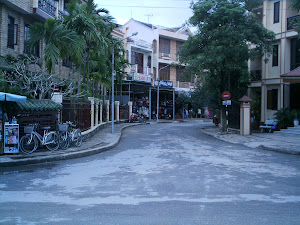
Dien Bien Phu St. Villa, Hanoi

Villa on Dien Bien Phu St. Hanoi

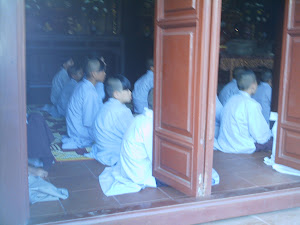
Young Monks In Training
U.S Huey Helicopter

B52 Wreckage

Manly Beach, Australia

Manly Beach, Australia

Luxury Homes, Manly Beach

Surf's Up, Manly Beach

Surf's Up, Manly Beach

Jet Cat

Sydney - Manly
Bondi Beach, Australia

Bondi Beach, Australia

Bondi Beach, Australia

Narrabeen Beach, Australia

Want a whole Beach to Yourself?
William Street Sydney

Sydney Harbour Bridge

Sydney Skyline

Sydney Opera House

MBK Mall

Reclining Buddha


I am smiling; just don't touch me

Sydney Harbour

Sydney Train

Sydney Skyline

Breakfast in Hanoi, Vietnam

POW Compound Hanoi, Vietnam

POW Compound Hanoi, Vietnam

POW Compound Hanoi, Vietnam

Hanoi Lake, Vietnam :

Presidential Palace Hanoi, Vietnam

Ho Chi Minh's Mausoleum

Hanoi: Lessons by the lake

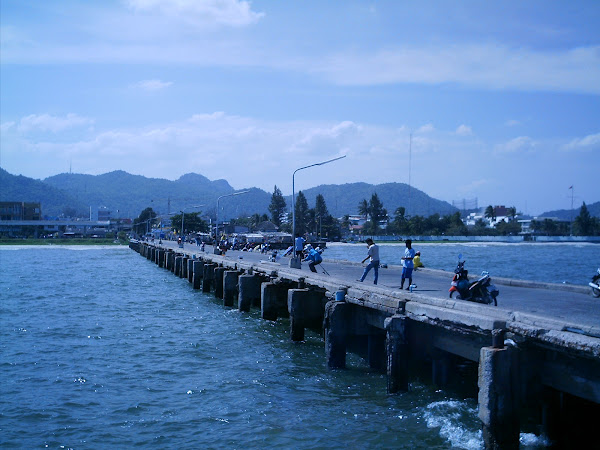
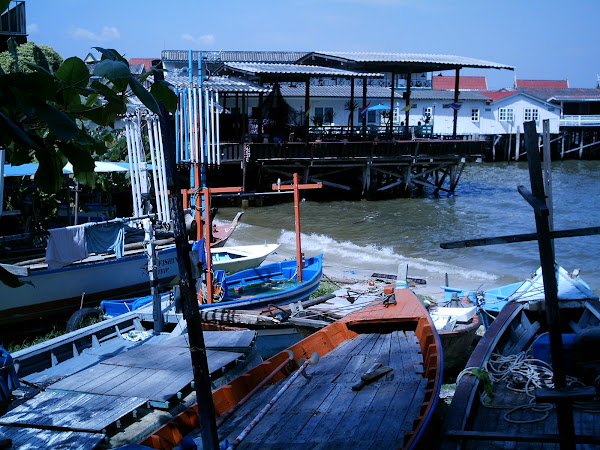
Hua Hin Pier
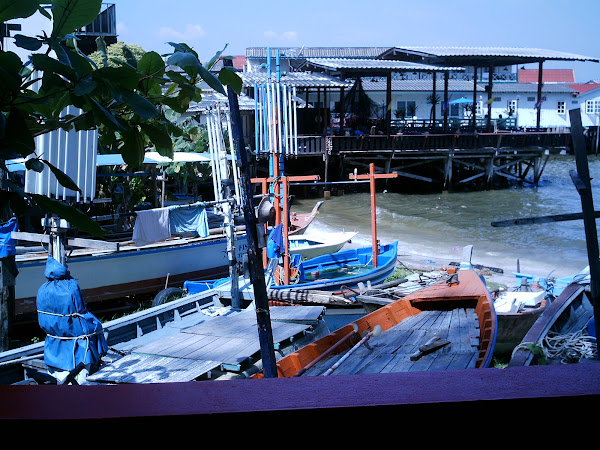
Hua Hin Fishing Boats
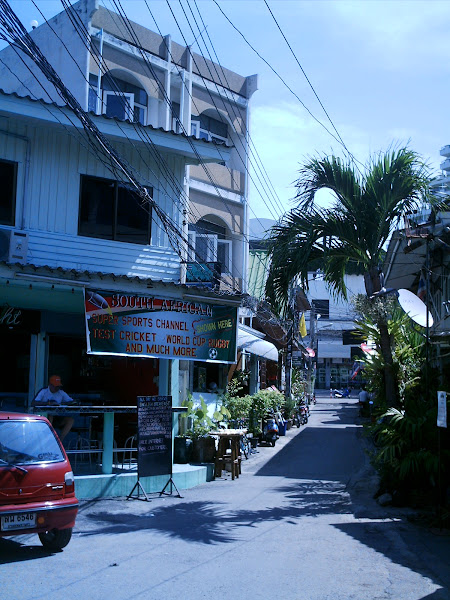
Hua Hin Old Quarter
Hua Hin Seafood Restaurants
Soi 4 Bangkok NaNa

Bangkok: Or is it Miami?
