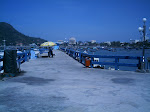
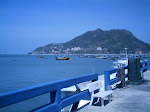
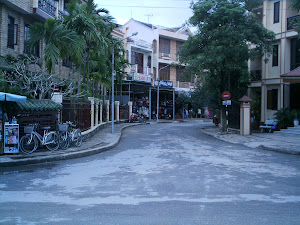




Instead of taking the motorway from Limassol to Nicosia all the way, our group made a detour via the picturesque mountain village of Pano Lefkara. This is one of the main areas where lace is still produced by hand. Some of the smaller, handkerchief size pieces, take a week to make. How much you ask? 20€ .
As you drive through the countryside, it's hard not to notice all the fruits and vegetables that are grown in Cyprus. We tend to think only about the abundance of olive trees, but Cyprus grows just about everything except pineapples.
The dream of every Greek Cypriot is to have his own home. Almost all the villas you see rising above the hills throughout Cyprus are new. The old is painstakingly restored with government grants. So, you will find the old town centres are lovingly preserved for future generations to enjoy. What you won't find are greedy developers bulldozing large tracts of old properties to build something new.
Nicosia remains the only divided capital in the western world. Since 1974, The Turks have occupied the northern part of the city as well as the northern part of the island. The Turkish Cypriots, who lived in the south and moved to the north, were compensated by the Turkish Government with land, a house and in some cases a car. Similar compensation was given, by the Cypriot Government, to Greek Cypriots who moved to the south. Despite negotiations between both parties, the Turks have not indicated their willingness to leave the island. In fact, to underscore their point, they have brought in thousands of mainland Turks to live in the northern territory.
If you wanted to phone someone in the Turkish occupied zone, you might only be twenty feet from that person, but your call would be routed through Turkey, Asia – a continent away. The border itself is very informal and relaxed. To cross from Cyprus to the so called “Turkish Republic of Northern Cyprus”, you present your passport and a very official looking person stamps a piece of paper. You get 90 days to visit or get Turkish delight. Now, let's say you fly into the “Turkish Republic of Northern Cyprus”. Your passport will be stamped on arrival.
So you think a trip to Greek Cypriot Cyprus would be a good move. Guess what, you will most likely be refused entry because of your passport stamp. So how come I can go from Nicosia in the south to Nicosia in the north and return without a problem? The Cypriots just pretend you haven't been there because your passport isn't stamped by the Turks.
Nicosia is a sprawling metropolis of 250.000 people . While tourists do visit, it is not their usual destination. I wish I'd had more time to visit Nicosia, but half a day doesn't do it justice. I saw the Cypriot version of the Statue of Liberty, and the Cathedral of St. John with its magnificent wall paintings.
Friday, December 11, 2009
Monday, December 7, 2009
Famagusta
If you've ever wondered what it would be like to travel back in time, Famagusta, Cyprus is the city that will take you back to 1974. Our guide explained that she “was six years old when the Turks invaded her Northern home town of Keryneia through the Port”. She further explained, “her whole family had to leave their home, at short notice, and fled to the south with only a few items of clothing.” Turkish families then moved into the vacant houses with the backing of the Turkish Government. Sometimes, Greek Cypriot families return to their original home towns to view their long lost homes. Their argument is not so much with the Turkish Cypriots who also fled their homes in the south, but with the mainland Turks who just filled up the areas of the North. Consequently, when properties are bought and sold, legitimate title is often not available.
And that's what happened in parts of Famagusta but not all of the city. So now, when you visit, the area is controlled by the Turkish military. In some areas visitors are allowed; vast areas with buildings still showing the bullet strafed markings of war. The prohibited areas, often called the “ghost City”, include abandoned hotels, houses and businesses. Since 1974 they have been frozen in time complete with new 1974 cars in showrooms.
The 14th century Cathedral of St. Nikolaos, which once stood proudly as a church, is now a mosque complete with a minaret. After 1974, the Turks developed the remainder of the city. It is this part that is accessible to visitors.
On a lighter note, leaving Famagusta, we headed for Ayia Napa on the coast where we had lunch at Christos Fish Tavern. What did I eat? Fish soup, of course.
During the winter months, it's pretty much deserted, but in the summer - watch out. Hordes of young tourists jam the streets of the resort.
And that's what happened in parts of Famagusta but not all of the city. So now, when you visit, the area is controlled by the Turkish military. In some areas visitors are allowed; vast areas with buildings still showing the bullet strafed markings of war. The prohibited areas, often called the “ghost City”, include abandoned hotels, houses and businesses. Since 1974 they have been frozen in time complete with new 1974 cars in showrooms.
The 14th century Cathedral of St. Nikolaos, which once stood proudly as a church, is now a mosque complete with a minaret. After 1974, the Turks developed the remainder of the city. It is this part that is accessible to visitors.
On a lighter note, leaving Famagusta, we headed for Ayia Napa on the coast where we had lunch at Christos Fish Tavern. What did I eat? Fish soup, of course.
During the winter months, it's pretty much deserted, but in the summer - watch out. Hordes of young tourists jam the streets of the resort.

Friday, December 4, 2009
Troodos Safari
Troodos Safari
“A fantastic journey traveling through rugged pinewood hills and valleys with breath-taking views and scenery. Marvel at the beauty of the Cyprus mountain areas, the flora and fauna. Take a deep breath of the pure air of the pine forest and enjoy visiting the sleepy little villages dotted along the hillsides”. That's according to Ascot Jeep Safari in Limassol - couldn't have said it any better myself.
Promptly at 8am, A Jeep Defender arrived to take our group on a drive not easily forgotten. Leaving behind a fast highway, we headed for the hills, or, more correctly, the mountains. The temperature at Limassol was 23 degrees. Gradually, it dropped to 6 degrees. Our first stop was at Pano Kivides village. So, all eight of us jumped out of the Jeep. There were two Russian ladies, a young Polish couple with a seven month old boy, a Cypriot driver, and Antonia our Belarusian guide. After a free wine tasting, we all became more relaxed-and that was at 9:30am.
The roads become back - roads impassable by cars. Soon, we were driving through the clouds with sheer drops off the back-road. The Russian ladies were clearly nervous, but strangely, the seven month old child uttered not a murmur. We stopped at Arminou Water Dam to take the obligatory photos. One moment we could see a panoramic view, then the clouds surrounded us, and we could only see about fifty meters in front of us. Then, after more stomach churning drives, we came to Kelefos Bridge. According to Ascot Travel, this is “an ancient bridge which connected two parts of Cyprus many years before.”
Kykkos Byzantine Monastery was definitely a highlight of the trip. Ascot states, “the largest and the most prestigious active monastery in Cyprus”. The photos, however, speak for themselves. And then we arrived at Mount Olympus which is claimed to be 1950 meters. Antonia, our guide, said “on a clear day you can see the Northern coast of Cyprus as well as Limassol”. Because of the clouds and time of year, we couldn't see anything. The Russian ladies wanted to see the tomb of Archbishop Makarios.
A gigantic statue weighing forty tons was moved to its present location because the Archbishop Makarios wanted to be buried at the highest point in Cyprus. According to Antonia, “local custom says that if you leave a piece of your clothing at the tomb, you will be cured of your ills”. Because it was so cold, I decided not to do that.
After that, we visited Platres village. This was a charming mountain village reminiscent of a Swiss Alpine village. Everyone was eager to get there since lunch was waiting for us. Huge chunks of lamb and chicken were quickly devoured. Jugs of wine were also disposed of without hesitation.
Adequately nourished, we came to the spectacular Milomery Waterfalls. We descended by steep rock steps into the base of the waterfalls. We were rewarded by the sight of one of the largest waterfalls in Cyprus. Our trip ended by passing the largest dam in Cyprus.
I should point out that this trip requires an active mobile person. If you have trouble walking or climbing, then this Jeep Safari is not for you.
You can book through your hotel or Ascot Travel directly.
“A fantastic journey traveling through rugged pinewood hills and valleys with breath-taking views and scenery. Marvel at the beauty of the Cyprus mountain areas, the flora and fauna. Take a deep breath of the pure air of the pine forest and enjoy visiting the sleepy little villages dotted along the hillsides”. That's according to Ascot Jeep Safari in Limassol - couldn't have said it any better myself.
Promptly at 8am, A Jeep Defender arrived to take our group on a drive not easily forgotten. Leaving behind a fast highway, we headed for the hills, or, more correctly, the mountains. The temperature at Limassol was 23 degrees. Gradually, it dropped to 6 degrees. Our first stop was at Pano Kivides village. So, all eight of us jumped out of the Jeep. There were two Russian ladies, a young Polish couple with a seven month old boy, a Cypriot driver, and Antonia our Belarusian guide. After a free wine tasting, we all became more relaxed-and that was at 9:30am.
The roads become back - roads impassable by cars. Soon, we were driving through the clouds with sheer drops off the back-road. The Russian ladies were clearly nervous, but strangely, the seven month old child uttered not a murmur. We stopped at Arminou Water Dam to take the obligatory photos. One moment we could see a panoramic view, then the clouds surrounded us, and we could only see about fifty meters in front of us. Then, after more stomach churning drives, we came to Kelefos Bridge. According to Ascot Travel, this is “an ancient bridge which connected two parts of Cyprus many years before.”
Kykkos Byzantine Monastery was definitely a highlight of the trip. Ascot states, “the largest and the most prestigious active monastery in Cyprus”. The photos, however, speak for themselves. And then we arrived at Mount Olympus which is claimed to be 1950 meters. Antonia, our guide, said “on a clear day you can see the Northern coast of Cyprus as well as Limassol”. Because of the clouds and time of year, we couldn't see anything. The Russian ladies wanted to see the tomb of Archbishop Makarios.
A gigantic statue weighing forty tons was moved to its present location because the Archbishop Makarios wanted to be buried at the highest point in Cyprus. According to Antonia, “local custom says that if you leave a piece of your clothing at the tomb, you will be cured of your ills”. Because it was so cold, I decided not to do that.
After that, we visited Platres village. This was a charming mountain village reminiscent of a Swiss Alpine village. Everyone was eager to get there since lunch was waiting for us. Huge chunks of lamb and chicken were quickly devoured. Jugs of wine were also disposed of without hesitation.
Adequately nourished, we came to the spectacular Milomery Waterfalls. We descended by steep rock steps into the base of the waterfalls. We were rewarded by the sight of one of the largest waterfalls in Cyprus. Our trip ended by passing the largest dam in Cyprus.
I should point out that this trip requires an active mobile person. If you have trouble walking or climbing, then this Jeep Safari is not for you.
You can book through your hotel or Ascot Travel directly.
Wednesday, December 2, 2009
So you want to go to Cyprus. Should you go on a pre-paid hotel package trip, or rent an apartment, studio, or villa? Time and money will of course, determine what you eventually decide. To give you an idea, apartments from 1 bed to 3 beds will cost from 500 to 1000 PM. Studios start at 350 euros per month. Villas will run you 2000 euros PM. I chose an all inclusive trip with Thomas Cook. At about 30 pounds per day, it was a steal. Included half-board was breakfast and dinner. Through a free cooking class, I also had an opportunity to visit the kitchens and see the head chefs preparing the evening dinner. I can tell you that the kitchens were spotless; always a good sign. However, it gets better, I also got free trips and entertainment. To me, it was a no brainer. The hotel I stayed at was the "Arsinoe Beach Hotel" and yes, it's right across the street from the beach.
Should you want to venture further afield, there are day trips to the Troodos mountains, Famagusta and even into the Turkish occupied section.
Should you want to venture further afield, there are day trips to the Troodos mountains, Famagusta and even into the Turkish occupied section.
Sunday, November 29, 2009
Cyprus
In the Eastern corner of the mediterranean, nestled between Europe, Africa and Asia, lies the sun-drenched Island of Cyprus. So close to Lebanan and Israel, but so different in culture.
I chose a package trip with Thomas Cook originating at Gatwick. Since I'd never been to Cyprus before, selecting a destination was very much a random affair. Because of scheduling, I ended up in Limassol, which is between Pafos and Larnaca.
Cyprus has lots of rugged, rocky, hills, but don't expect to see much grass. My hotel, The Arsinoe Beach Hotel, is rated as a three star, and provides two swimming pools, two large dining rooms and lots of delicious food and entertainment. The beach, across the main road, is sandy and has the colour of cement. I'm told that other areas have the regular sand we know and love well. A ten minute hop on a local air-conditioned bus, will bring you into the old town of Limassol.
After years of occupation by the Ottomans and British among others, It's the British influence which has left the most visible imprint. Sadly, since 1974, the Turks still occupy the Northern part of Cyprus. I was surprised to learn that Limassol does not have an airport. Access is by luxury coach, either from Pafos or Larnaca, and normally takes one hour.
I joined a PAL free day-trip to Pafos called the "Blanket Trip", and consequently, listened to an hours worth of information about bio-cell bedding and Merino wool blankets. At the end of this presentation, I had to be awakened from my sleep. Somehow, I subconsciously absorbed all of this and am now able to sleep soundly - thank you PAL. Pafos has more of a small town feeling in comparison to Limassol.
To see some of the places of interest, try the red double-decker sightseeing bus located next to the harbour. Your choices for eating out are many. I now eat breakfast Greek-style; lettuce, tomato, feta cheese washed down with copious amounts of coffee. Cyprus also produces wine, brandy and beer.
I was fortunate enough to be invited on a tour of the local brewery and winery. KEO really pulled out all the stops with their selections of red and white wines, four or five full bottles to each table. And when those bottles had been finished. KEO brought out more. Well done KEO.
I chose a package trip with Thomas Cook originating at Gatwick. Since I'd never been to Cyprus before, selecting a destination was very much a random affair. Because of scheduling, I ended up in Limassol, which is between Pafos and Larnaca.
Cyprus has lots of rugged, rocky, hills, but don't expect to see much grass. My hotel, The Arsinoe Beach Hotel, is rated as a three star, and provides two swimming pools, two large dining rooms and lots of delicious food and entertainment. The beach, across the main road, is sandy and has the colour of cement. I'm told that other areas have the regular sand we know and love well. A ten minute hop on a local air-conditioned bus, will bring you into the old town of Limassol.
After years of occupation by the Ottomans and British among others, It's the British influence which has left the most visible imprint. Sadly, since 1974, the Turks still occupy the Northern part of Cyprus. I was surprised to learn that Limassol does not have an airport. Access is by luxury coach, either from Pafos or Larnaca, and normally takes one hour.
I joined a PAL free day-trip to Pafos called the "Blanket Trip", and consequently, listened to an hours worth of information about bio-cell bedding and Merino wool blankets. At the end of this presentation, I had to be awakened from my sleep. Somehow, I subconsciously absorbed all of this and am now able to sleep soundly - thank you PAL. Pafos has more of a small town feeling in comparison to Limassol.
To see some of the places of interest, try the red double-decker sightseeing bus located next to the harbour. Your choices for eating out are many. I now eat breakfast Greek-style; lettuce, tomato, feta cheese washed down with copious amounts of coffee. Cyprus also produces wine, brandy and beer.
I was fortunate enough to be invited on a tour of the local brewery and winery. KEO really pulled out all the stops with their selections of red and white wines, four or five full bottles to each table. And when those bottles had been finished. KEO brought out more. Well done KEO.
Subscribe to:
Posts (Atom)